


You are here:
[Xinhua News Agency] “White Gold” Paves the Way to Prosperity — Chinese Technology Helps Boost Production and Efficiency in Côte d’Ivoire’s Rubber Industry
发布时间:2025.09.27
At dawn in the town of Grand Béréby, San Pedro Province, Côte d’Ivoire, tricycles loaded with milky-white cup lump rubber weave through the rubber plantations and continuously make their way into a brand-new factory. In front of the scales, farmers carefully check the weight of their cup lump rubber, while the air is filled with the distinctive scent of rubber and the cheerful chatter of people.
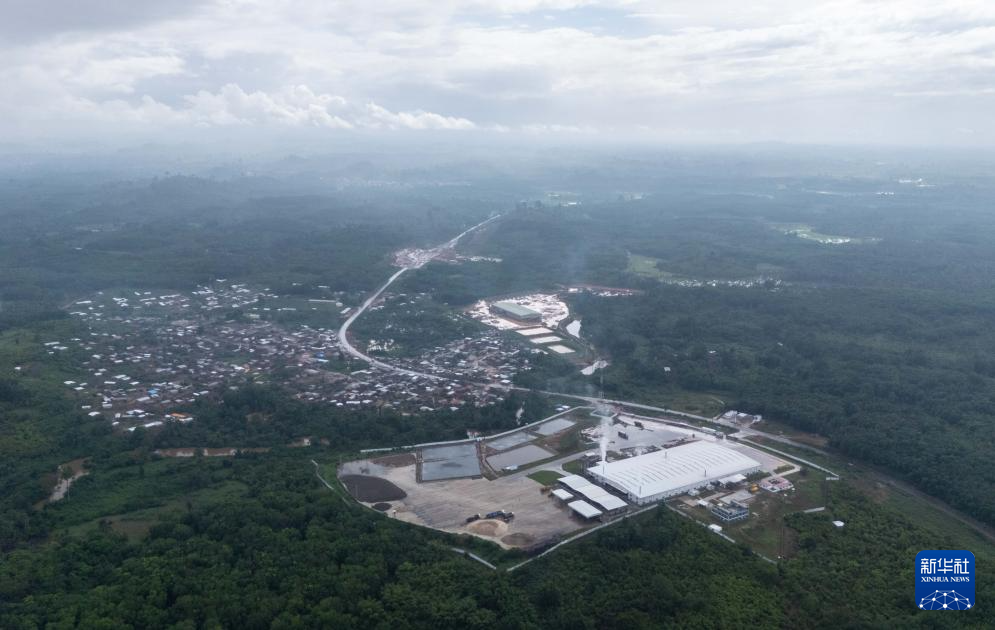
▲ This is a drone photo of the Mainland Group's rubber processing plant in the town of Grand Béréby, Saint-Pierre Province, Côte d’Ivoire, taken on May 30. Photo by Wang Guansen, Xinhua News Agency
Within the workshop, local workers skillfully operate the machinery on the production line. Fresh latex undergoes processes such as coagulation, sheeting, and drying to ultimately produce square, standard rubber blocks. In the laboratory, technicians record data on the elasticity and toughness of rubber samples to ensure that each batch meets international standards.
This is the third rubber processing plant established by the Chinese company Mainland Group in Côte d'Ivoire. It officially commenced operations in October last year with an annual production capacity of 100,000 tons. The Group’s first rubber processing plant in the southern Dabou Department began operations in 2020, and its 200,000-ton flagship plant in the western Duékoué Department was completed in 2022. According to reports, with the commissioning of two rubber processing plants currently under construction in the second half of this year, Mainland Group's annual production capacity in Côte d’Ivoire will surge to 480,000 tons.
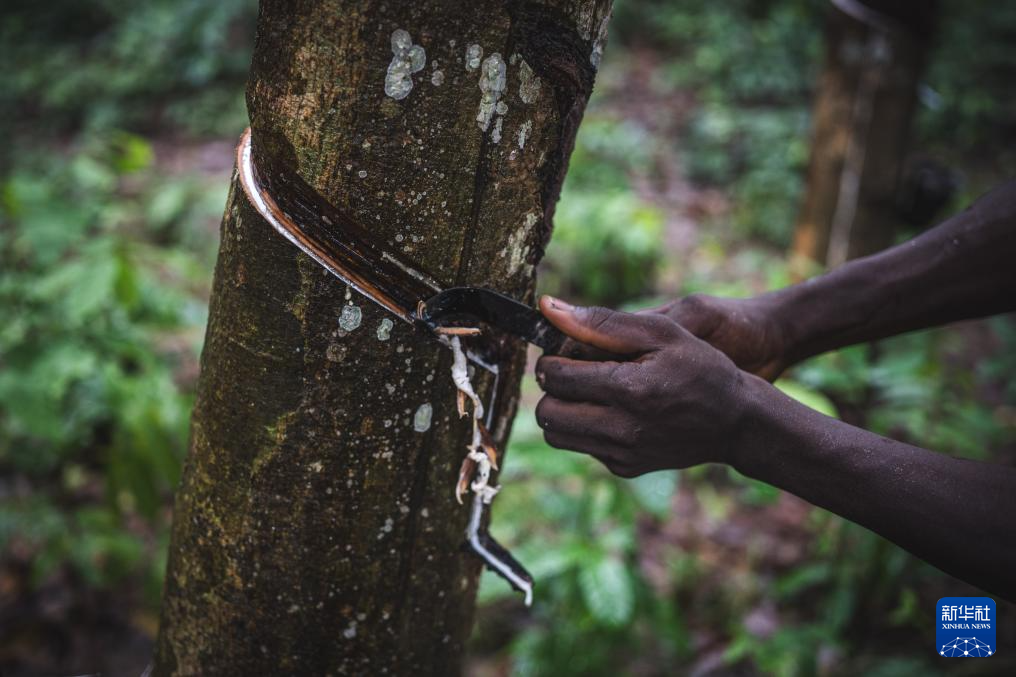
▲ On May 30, in the town of Grand Béréby, San Pedro Province, Côte d’Ivoire, rubber farmers cut into the bark of rubber trees to harvest fresh latex. Photo by Wang Guansen, Xinhua News Agency
Côte d'Ivoire is Africa's largest rubber producer. Here, natural rubber is regarded as “white gold.” Data shows that the country's rubber output surged from 815,000 tons in 2019 to 1.55 million tons in 2023, making it the world's third-largest rubber producer. From raw latex to high-value-added products, Chinese technology is helping the West Africa's rubber industry reshape its value chain, not only providing critical support for Côte d'Ivoire's industrial upgrading but also paving a path to prosperity and a better life for local rubber farmers.
“The rubber can be delivered to the plant within half an hour of tapping!” the rubber farmer Aliol Tohe said, wiping his sweat with a smile. His family has been engaged in rubber cultivation since the 1990s; in the past, they had to travel dozens of kilometers to find a collection station. “Now there's a Chinese factory right at our doorstep, with transparent and fair prices. My three children no longer have to worry about tuition fees,” he said, pointing to the numbers on the scale's display.
In the rumbling workshop, Kwasi Yannick Irité, wearing a safety helmet, is inspecting the production line. "In the past, young people had no choice but to go elsewhere to find job opportunities, but now we can process rubber produced in our own country right in our hometown!” said the acting production team leader, standing tall. “Here, I've not only learned how to operate precision equipment, but also how to lead a team. We're very proud of this plant.”
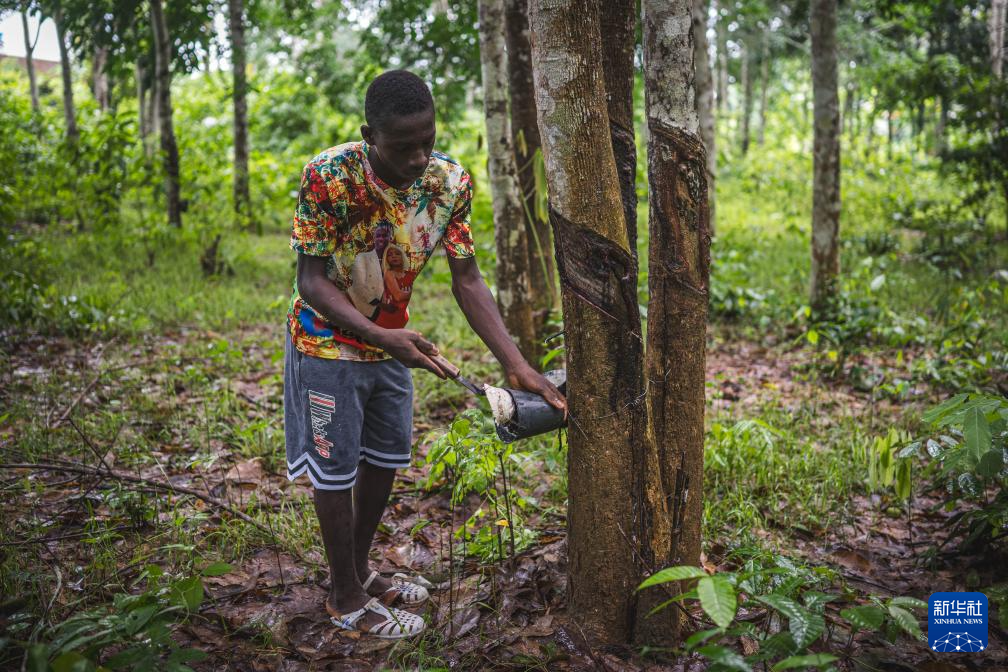
▲ On May 30, rubber farmers harvest rubber in the town of Grand Béréby, San Pedro Province, Côte d’Ivoire. Photo by Wang Guansen, Xinhua News Agency
Zhang Liang, the Deputy General Manager of Mainland Group, explained: “Plant No. 3 has the best technical performance among all our plants, with hourly output consistently reaching the design capacity.”
Behind the plant, three large wastewater treatment ponds are in operation. "The water used to wash rubber emits an odor after fermentation," Zhang Liang said, pointing to the drainage pipe in front of him. "We plan to introduce a screw press dewatering machine this year. This advanced Chinese equipment using sedimentation technology can bring the quality of the treated water close to that of clear water." In addition, a biomass power generation project will replace natural gas, and steam drying technology for rubber is being commissioned — these initiatives will enable Chinese companies to better support low-carbon rubber production in Côte d'Ivoire.
As dusk fell, a cargo ship loaded with containers of standard rubber sounded its horn and set sail from the Port of San Pedro. This "road to prosperity through rubber," jointly built by China and Côte d'Ivoire, is deeply engraving the true value of Côte d'Ivoire's "white gold" into the annals of Africa's development.
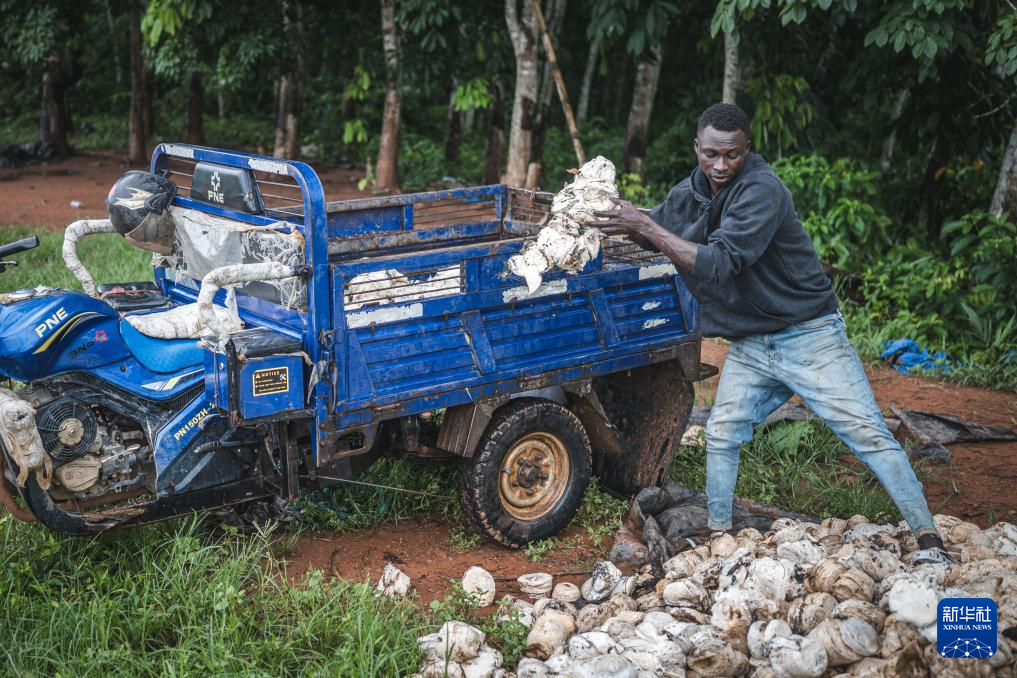
▲ On May 30, in the town of Grand Béréby, San Pedro Province, Côte d’Ivoire, rubber farmers carry freshly harvested rubber. Photo by Wang Guansen, Xinhua News Agency
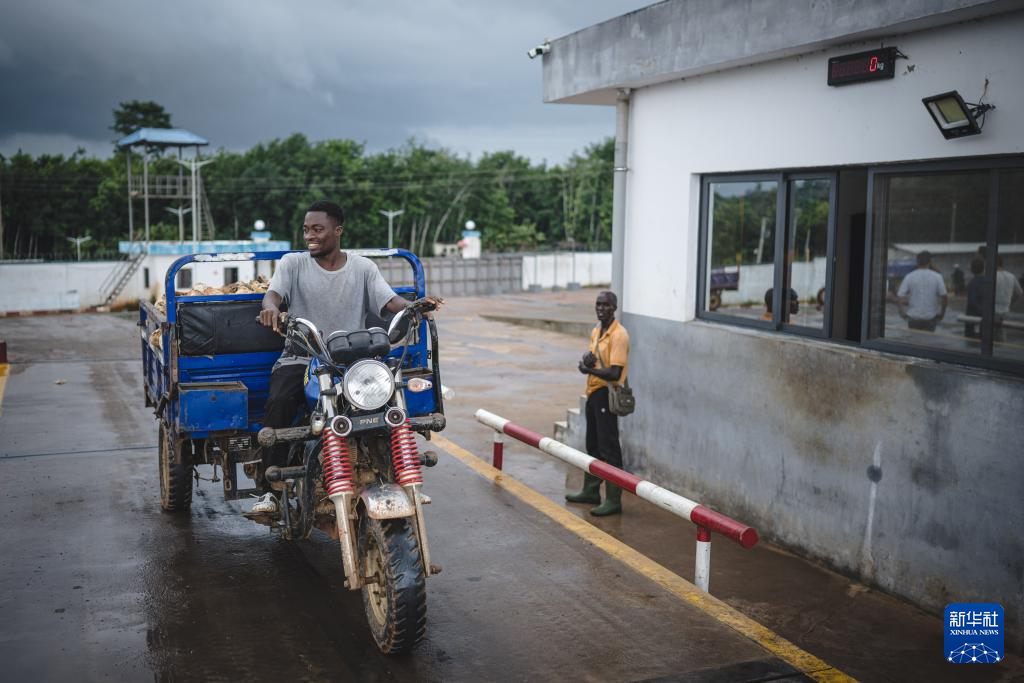
▲ On May 29, at the Mainland Group rubber processing plant in the town of Grand Béréby, San Pedro Province, Côte d’Ivoire, a rubber farmer rode a motor tricycle past a scale to weigh cup rubber. Photo by Wang Guansen, Xinhua News Agency
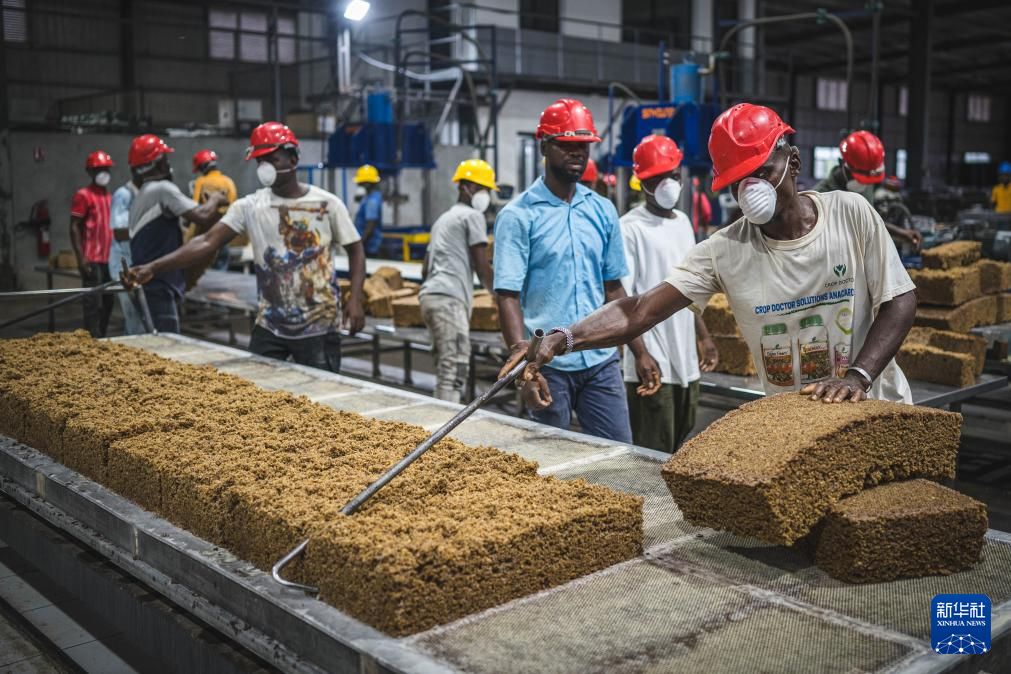
▲ On May 29, workers sort dried rubber blocks at the Mainland Group rubber processing plant in Grand Béréby, Saint-Pierre Province, Côte d’Ivoire. Photo by Wang Guansen, Xinhua News Agency
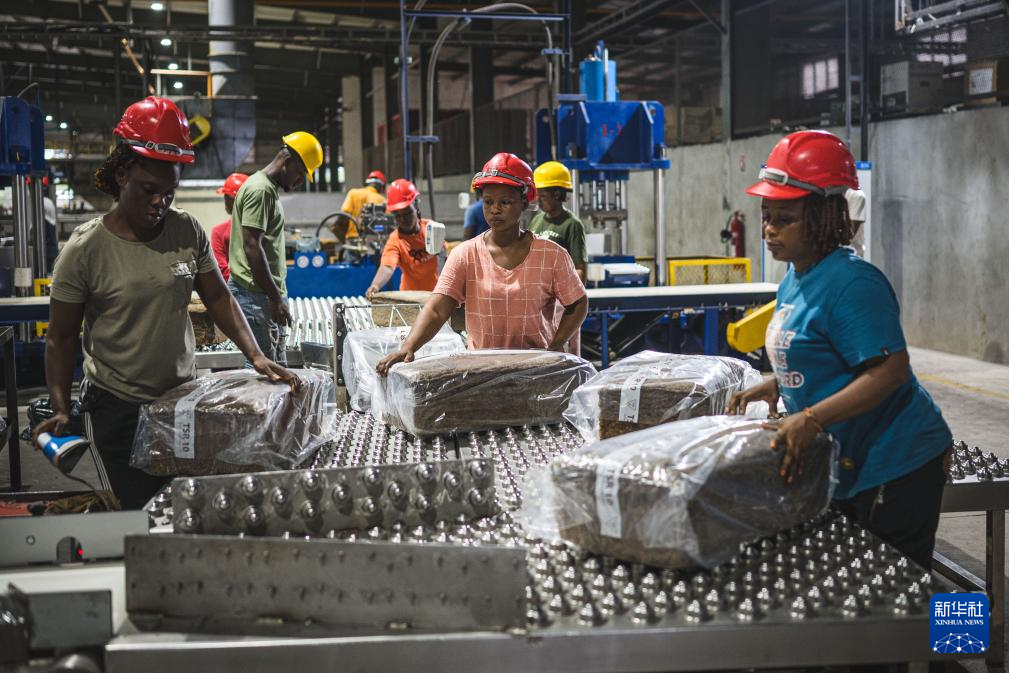
▲ On May 29, in the town of Grand Béréby, Saint-Pierre Province, Côte d’Ivoire, workers from the Mainland Group’s rubber processing plant packed rubber blocks. Photo by Wang Guansen, Xinhua News Agency
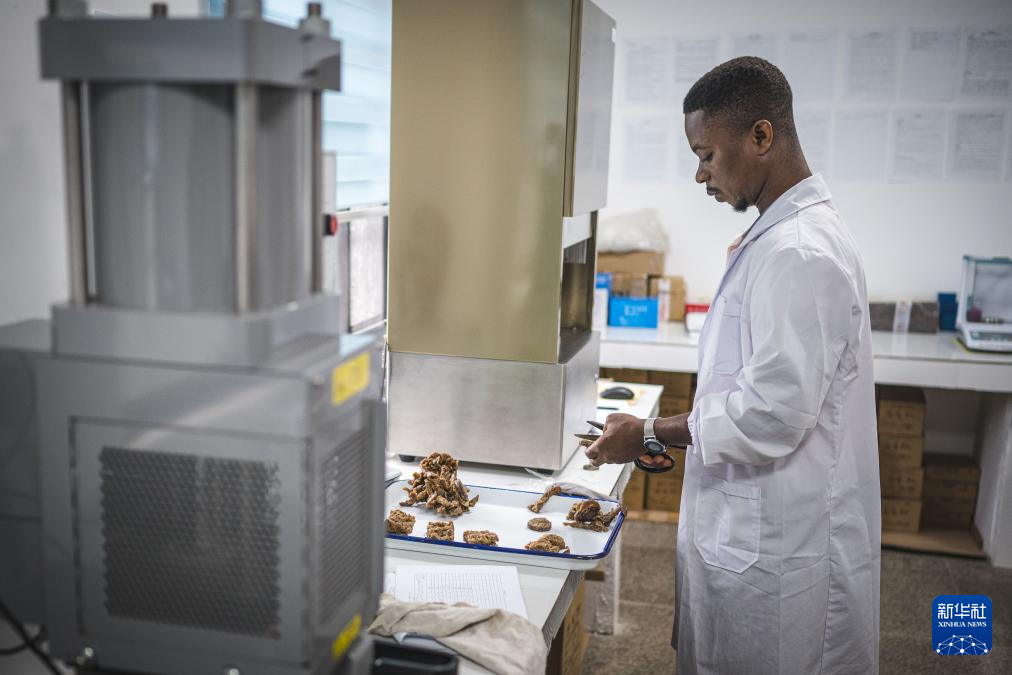
▲ On May 30, in the town of Grand Béréby, Saint-Pierre Province, Côte d’Ivoire, technicians from the Mainland Group’s rubber processing plant conducted quality tests on rubber. Photo by Wang Guansen, Xinhua News Agency